

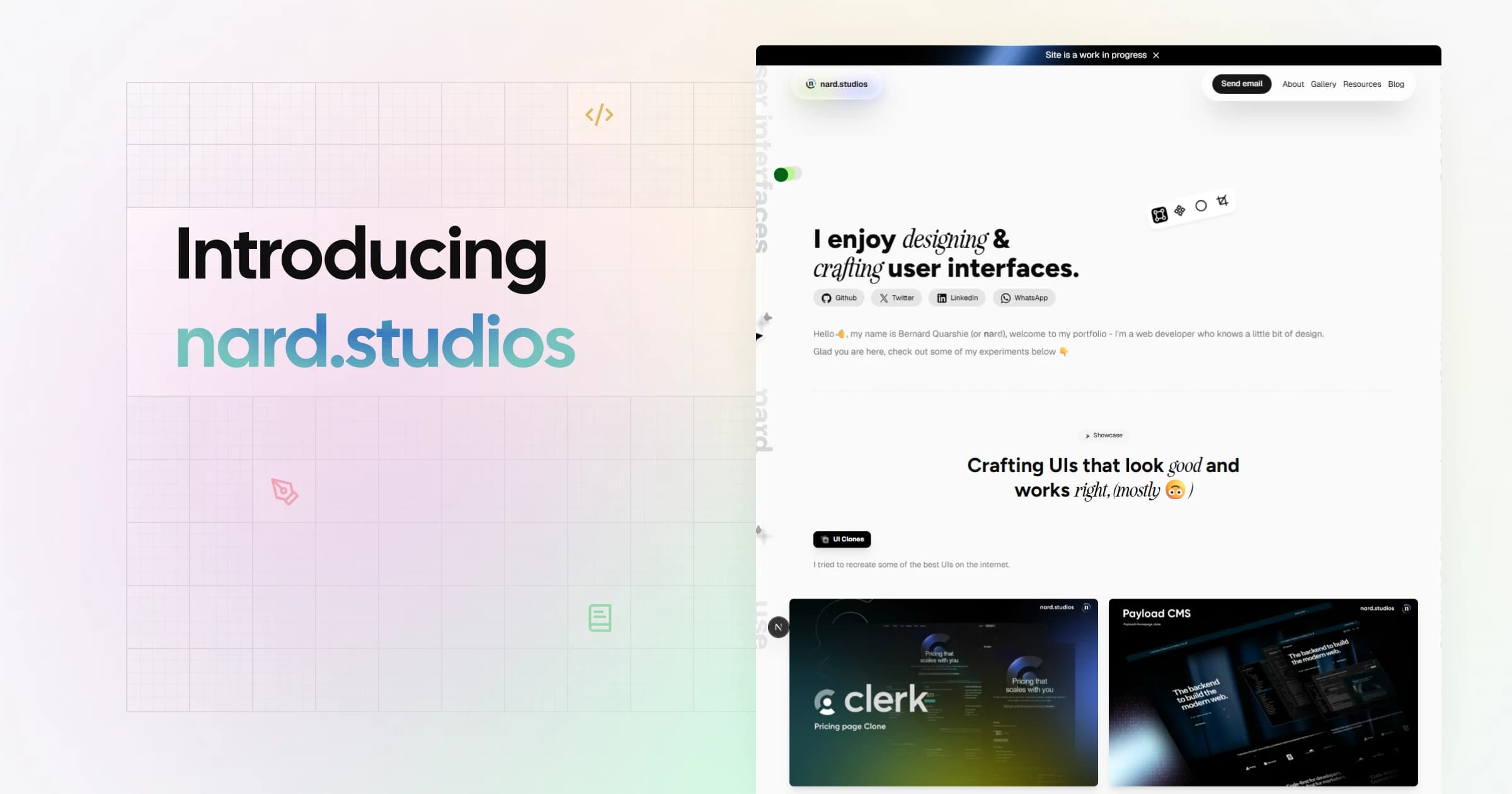
A Code-First Design & Development Studio
This decision has been many years in the making and this service will be focused on building, deploying, and maintaining performant, secure websites.
I intend on handling both design and development aspects but you can bring your own designs or a dedicated designer (if you wish) to speed up the creation process.
A Spectrum of Sites
Not all websites are built the same.
For example:
- A student may want a simple personal site to share resources or showcase a project. In most cases, that's a static site — fast to build, fast to ship, and may never need an update again.
- A business, on the other hand, may require something far more dynamic or even realtime: user accounts, dashboards, data storage, analytics, notifications, or custom integrations. Such a project may take days or weeks and will likely require continuous monitoring and improvements throughout its service life.
In other words: two websites, two completely different levels of dedication. Understanding these needs is the first step—long before budget comes into play.
The technicalities usually come next — although most founders don't really care about that. They just want quick, clean, snappy sites for their users. But for those that do care, here's my philosophy of approach:
Full-code by default — no-code on request.
There are amazing no-code tools today, and they absolutely have their place:
- Webflow
- Framer
- WordPress
(I am listing these products here simply because I use these from time to time — not sponsored by the way, just tools I trust)
However, I use full-code almost exclusively, because I demand total creative control. If a tool won't let me tweak a parameter, refine how something behaves, or optimize performance at the atomic level, then it's not good enough for me, in my opinion. This is where full-code shines.
Tech Stack
For code-based projects:
- Next.js (my primary framework for both frontend and backend)
- Supabase, MongoDB, or Firebase for backend/databases
- Supporting libraries for UI, animations, auth, state management, caching, etc.
For no-code projects (when requested or suitable):
- Webflow
- Framer
These no-code tools allow you to build without writing code, though advanced features often require custom scripts. But with flexibility comes cost — features like additional pages, forms, bandwidth, and custom hosting may require you to upgrade to a paid plan.
Types of websites built
A few examples of the websites included in this service:
- Portfolio websites
- Personal brands / creators pages
- Small business websites
- Landing pages for products .etc
Pricing Philosophy
Pricing is guided by:
- Complexity (static vs dynamic)
- Functionality needed (auth, dashboards, forms, APIs, CMS, custom domains, etc.)
- Design requirements (custom UI vs minimal layout)
- Maintenance expectations (one-time vs ongoing)
This way, you won't pay for things you don't need, and you won't be surprised with hidden costs later.
Conclusion
It's 2025, and it's easier than ever to create a website. But the hard part, the part that actually matters, is giving it that personal, thoughtful touch.
If you're okay with a site that looks like dozens of others, no-code tools will get you there. But if you want something custom, performant, maintainable, and built with intention, then that's where design services, much like this one, exist to help you ship faster, stay well-maintained, and remove the hassle of trying to juggle site maintenance with running an actual business.
Whether you're a student, a creator, a small business, or founder, if you have any idea, I'd be happy to help bring it online.
Thank you for reading this far, have any comments, feedbacks or suggestions? Please do shoot me a message via the contact button above. If you need more clarity and ready to get started,
Learn more here.